
FCC Bans New Foreign-Made Routers Over Supply Chain and Cyber Risk Concerns
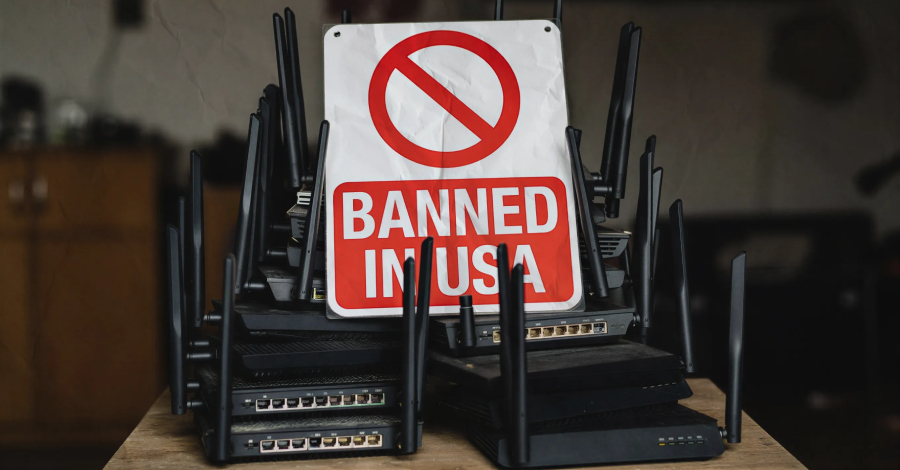
FCC Bans New Foreign-Made Routers to Block Cybersecurity & Supply Chain Risks
For General Readers (Journalistic Brief)
The U.S. Federal Communications Commission (FCC) has taken a significant step to bolster national security by banning the sale and import of new consumer routers manufactured in certain foreign countries. This decisive action is aimed at preventing potentially compromised devices from entering the U.S. market, thereby reducing the risk of cyberattacks and espionage.
The core concern is that routers from these specific countries may harbor hidden security flaws. These vulnerabilities could be exploited by malicious actors, including foreign governments, to gain unauthorized access to American homes and businesses. Such access could be used for spying, disrupting critical services, or launching broader cyber offensives against U.S. networks.
It's important to note that this ban applies only to new routers being sold or imported into the United States. If you already own a router that falls under this ban, there is no immediate need to replace it. Similarly, existing FCC-approved router models are unaffected by this new rule.
This FCC mandate underscores a growing global awareness of how everyday technology can become a gateway for sophisticated cyber threats. By blocking potentially vulnerable devices at the border, the U.S. government seeks to close off avenues for adversaries and strengthen the nation's overall digital defenses.
Technical Deep-Dive
1. Executive Summary
The U.S. Federal Communications Commission (FCC) has implemented a prohibition on the importation and sale of new consumer routers originating from specific foreign countries. This policy directive stems from "unacceptable" cybersecurity and supply chain risks identified by U.S. Executive Branch agencies. The objective is to preempt the deployment of devices susceptible to exploitation for espionage, network disruption, and as enablers for advanced cyberattacks against U.S. interests, including critical infrastructure. As this is a policy-driven ban rather than a specific vulnerability disclosure, a CVSS score is not directly applicable. However, the potential impact is classified as High due to the strategic value of compromised network devices as pivot points for nation-state actors. Existing FCC-authorized models and routers already in consumer possession are exempt from this ban.
2. Technical Vulnerability Analysis
The FCC's directive is a policy measure addressing systemic risks associated with certain foreign-manufactured consumer routers, rather than a specific Common Vulnerabilities and Exposures (CVE) identifier. The underlying technical concerns are multifaceted and relate to the inherent security posture and development practices prevalent in some of these devices.
- CVE ID and Details: Not applicable. This is a policy-driven import/sale ban, not a specific vulnerability disclosure.
- Root Cause (Code-Level): The root causes are not a single, specific code flaw but rather a pattern of security deficiencies. These include:
- Insecure Firmware Development Practices (CWE-20, CWE-1104): A pervasive lack of adherence to secure coding standards, insufficient input validation, reliance on outdated and vulnerable libraries (e.g., legacy versions of BusyBox, OpenSSL), and inadequate security testing throughout the firmware development lifecycle. This can manifest as common vulnerabilities such as buffer overflows (CWE-120), command injection (CWE-78), cross-site scripting (CWE-79), SQL injection (CWE-89), and insecure deserialization (CWE-502).
- Weak Authentication and Authorization (CWE-521, CWE-287): Prevalence of default or easily guessable credentials (e.g.,
admin/admin,root/password), absence of multi-factor authentication (MFA) support, and insufficient granular access control for administrative interfaces. - Hardcoded Credentials or Backdoors (CWE-798): The potential for malicious actors or the manufacturing entity to embed hardcoded credentials or covert access mechanisms directly within the firmware, bypassing standard authentication protocols.
- Lack of Secure Update Mechanisms (CWE-311, CWE-1104): Inability to securely and reliably update firmware, often due to unencrypted update channels, lack of signature verification, or the absence of a robust update infrastructure, leaving devices perpetually vulnerable to known exploits.
- Hardware-Level Tampering: The possibility of physical tampering during manufacturing or transit to introduce malicious hardware components, such as covert network taps or hardware backdoors, which are exceptionally difficult to detect via software means.
- Affected Components: All new consumer-grade routers manufactured in foreign countries that have not received explicit Conditional Approval from the Department of Homeland Security (DHS). Vulnerable components typically include:
- Web-based Management Interface: Web server daemons (e.g., httpd, lighttpd), CGI scripts, authentication modules, and session management.
- Network Services: Core daemons such as DHCP server (e.g., ISC DHCP), DNS resolver (e.g., dnsmasq), firewall daemon (e.g., iptables, nftables), VPN services, and routing daemons.
- Operating System/Firmware: Embedded Linux distributions, kernel modules, system libraries, and user-space applications.
- Hardware Components: Potential for embedded malicious hardware.
- Attack Surface:
- Internet-Facing Management Interface: If exposed, this is a prime target for unauthenticated remote exploitation.
- Local Area Network (LAN) Interface: Compromise of devices within the LAN can enable an attacker to pivot and exploit the router's management interface from within the trusted network.
- Firmware Update Mechanism: If insecure, an attacker could push malicious firmware.
- Physical Access: For hardware-level tampering.
3. Exploitation Analysis (Red-Team Focus)
The FCC's ban implies that many foreign-manufactured routers are considered inherently exploitable or possess a high probability of containing exploitable vulnerabilities. This makes them attractive targets for sophisticated threat actors.
- Red-Team Exploitation Steps:
- Reconnaissance:
- External: Utilize internet-wide scanning platforms (e.g., Shodan, Censys) to identify internet-exposed router management interfaces. Analyze HTTP headers, banners, and HTML content for vendor and model identification.
- Internal: Perform network scans (e.g., Nmap with specific router scripts) to enumerate devices, identify router IPs, and fingerprint firmware versions within the target network.
- Vulnerability Identification & Triage:
- Pre-authentication Remote Exploitation: Target identified internet-facing or internally accessible management interfaces. Attempt to exploit known vulnerabilities (e.g., command injection in CGI scripts, buffer overflows in web server components) that do not require prior authentication. This involves crafting malicious HTTP requests.
- Post-authentication Exploitation: If authentication is required, attempt to leverage default credentials, common weak passwords, or exploit credential stuffing/brute-force attacks against the management interface.
- Firmware Analysis: If firmware images are obtainable, perform static and dynamic analysis using tools like Binwalk, Ghidra, IDA Pro, and emulators to uncover hidden vulnerabilities.
- Exploitation Execution:
- Command Injection: Inject shell commands into vulnerable parameters within HTTP requests. Example:
GET /cgi-bin/admin.cgi?cmd=ping&ip=$(id)&submit=Apply HTTP/1.1. The output ofidwould be returned in the response. - Buffer Overflow: Craft input data to exceed buffer boundaries, overwriting adjacent memory regions (including return addresses on the stack) to redirect execution flow to attacker-controlled shellcode.
- Command Injection: Inject shell commands into vulnerable parameters within HTTP requests. Example:
- Payload Delivery & Staging: Once code execution is achieved, the attacker would typically:
- Establish Persistence: Install a backdoor, modify startup scripts (e.g.,
/etc/init.d/rcS,/etc/rc.local), inject malicious code into legitimate system processes, or create new user accounts with elevated privileges. - Download Further Tools: Fetch more sophisticated malware, reconnaissance agents, or command and control (C2) frameworks from an attacker-controlled server (e.g., using
wget,curl, or TFTP). - Establish C2 Channel: Create a covert communication channel (e.g., DNS tunneling, HTTP/S POST requests to known C2 domains/IPs, custom TCP/UDP protocols) to receive commands and exfiltrate data.
- Establish Persistence: Install a backdoor, modify startup scripts (e.g.,
- Post-Exploitation Activities:
- Network Pivoting: Utilize the compromised router as a jump host to access internal network segments, bypassing perimeter defenses.
- Traffic Interception/Monitoring: Inspect network traffic passing through the router for sensitive data.
- DNS Hijacking: Modify DNS settings to redirect user traffic to malicious websites.
- Botnet Integration: Enlist the router into a botnet for DDoS attacks, spam distribution, or cryptocurrency mining.
- Credential Harvesting: Deploy keyloggers or sniff network traffic for credentials from devices on the network.
- Reconnaissance:
- Privileges Needed:
- Remote Exploitation (Pre-authentication): No privileges required. Network access to the vulnerable interface is sufficient.
- Remote Exploitation (Post-authentication): Low-privileged user credentials obtained through other means.
- Local Exploitation: Local user privileges on a device within the same network segment as the router, or direct physical access.
- Network Requirements: Network reachability to the router's management interface (internet or internal network).
- Public PoCs and Exploits: Specific CVEs are not cited in the source article. However, the described TTPs are common for router exploitation. Generic PoCs for common router vulnerabilities can be found on platforms like Exploit-DB, GitHub, or through vulnerability research blogs. Tools like Nmap Scripting Engine (NSE) can be used for vulnerability scanning and exploitation.
- Exploitation Prerequisites:
- The router must be a "new foreign-manufactured consumer router" not covered by FCC exemptions.
- The router's management interface must be accessible.
- The router must possess an unpatched, exploitable vulnerability or weak default credentials.
- The exploit technique must be applicable to the router's firmware architecture and version.
- Automation Potential: High. Exploitation can be highly automated once a specific vulnerability or default credential set is identified. Tools can be developed to scan networks, identify vulnerable devices, and execute exploits in a worm-like fashion, especially if the vulnerability allows for remote, unauthenticated code execution.
- Attacker Privilege Requirements: Ranging from unauthenticated to low-privileged user on the local network, or compromised credentials. The ultimate objective is administrative control of the router.
- Worst-Case Scenario:
- Confidentiality: Complete compromise of all network traffic passing through the router, leading to the exfiltration of sensitive data, intellectual property, credentials, and personal information from all connected devices.
- Integrity: Modification of network traffic (e.g., DNS hijacking, man-in-the-middle attacks), injection of malicious code into legitimate traffic, or alteration of router configurations to facilitate persistent access, denial of service, or redirection to malicious destinations.
- Availability: Disruption of internet connectivity for all connected users, or the router being used as a pivot point to launch large-scale Distributed Denial of Service (DDoS) attacks against critical infrastructure or other targets, potentially leading to widespread service outages and economic disruption.
4. Vulnerability Detection (SOC/Defensive Focus)
How to Detect if Vulnerable:
- Inventory and Asset Management: Maintain a comprehensive inventory of all network devices, including precise model numbers, serial numbers, and firmware versions. Cross-reference with the FCC's "Covered List" or known lists of vulnerable foreign-manufactured routers.
- Firmware Version Audits: Regularly audit firmware versions against vendor advisories for known vulnerabilities. Automated tools can assist.
- Configuration Audits: Scan for open management interfaces on the internet or unexpected internal ports. Check for the use of default or weak administrative credentials using credential scanning tools.
- Vulnerability Scanning: Employ network vulnerability scanners (e.g., Nessus, Qualys, OpenVAS) configured with router-specific plugins. Ensure scanners are updated with the latest vulnerability databases.
- Proof-of-Concept Detection Tests (Safe):
- Nmap Scripting Engine (NSE): Utilize NSE scripts designed to detect specific router vulnerabilities (e.g.,
http-enum,http-router-info, scripts for common CGI vulnerabilities, default credential checks). - Web Server Analysis: For internet-facing interfaces, analyze HTTP headers (e.g.,
Server,X-Powered-By) and response pages for clues about the underlying web server, firmware, and version. - Port Scanning & Service Fingerprinting: Identify open management ports (e.g., 80, 443, 8080, 8443) and attempt to fingerprint the services running on them.
- Nmap Scripting Engine (NSE): Utilize NSE scripts designed to detect specific router vulnerabilities (e.g.,
Indicators of Compromise (IOCs):
- File Hashes: If malware is dropped onto the router's filesystem (less common for the router itself, but possible if it runs a Linux-like OS with writable storage).
- Network Indicators:
- Unusual outbound connections from the router to known malicious IP addresses or domains (e.g., C2 servers).
- High volumes of DNS queries to suspicious, newly registered, or obscure domains.
- Anomalous traffic patterns (e.g., unexpected UDP/TCP connections, large data transfers to unusual destinations, spikes in traffic volume).
- Connections to non-standard ports used for covert C2 communication (e.g., port 53 for DNS tunneling, non-standard ports for HTTP/S).
- Process Behavior Patterns:
- Execution of unexpected system commands or scripts on the router's OS (if logging is enabled).
- Processes attempting to bind to privileged ports or modify network configurations without authorization.
- Creation of new user accounts or modification of existing ones in system configuration files.
- Registry/Config Changes: Modification of critical configuration files (e.g.,
/etc/config/network,/etc/passwd,/etc/shadow, firewall rulesets) on Linux-based routers. - Log Signatures:
- Failed login attempts followed by successful logins from unusual or unexpected sources.
- Execution of administrative commands (e.g.,
iptables,route,wget,netcat) from unexpected contexts or users. - Error messages indicating firmware corruption, unauthorized modifications, or service failures.
- DHCP lease logs showing unusual device MAC addresses or IP assignments, or excessive lease renewals.
SIEM Detection Queries:
1. KQL Query: Detecting Suspicious Outbound Connections from Network Devices (Potentially Routers)
This query targets devices exhibiting network behavior consistent with compromised routers acting as C2 clients. It assumes a log source that captures network connection details.DeviceNetworkEvents | where Timestamp > ago(7d) | where RemoteIP !in ("192.168.0.0/16", "10.0.0.0/8", "172.16.0.0/12") // Exclude private IP ranges | where ActionType == "ConnectionSuccess" | summarize ConnectionCount = count() by DeviceName, RemoteIP, RemotePort, InitiatingProcessName, InitiatingProcessAccountName, Protocol | where ConnectionCount > 10 // Threshold for repeated connections, indicating potential C2 beaconing | join kind=inner ( // Threat Intelligence Feed for known malicious IPs/Domains externaldata(IP:string, Domain:string, Category:string) [ @"https://raw.githubusercontent.com/your-org/threat-intel/main/malicious_ips_and_domains.csv" // Placeholder: Replace with your curated threat intel feed URL ] on $left.RemoteIP == $right.IP or $left.RemoteHostName == $right.Domain // Assuming RemoteHostName is available or can be resolved ) | project Timestamp, DeviceName, RemoteIP, RemotePort, Protocol, InitiatingProcessName, InitiatingProcessAccountName, ConnectionCount, Category, Description = "Suspicious outbound connection from a device to a known malicious IP/Domain, potentially indicating C2 activity from a compromised router."Log Sources: Microsoft Defender for Endpoint (DeviceNetworkEvents), Zeek/Bro (conn.log), Firewall logs, Proxy logs, EDR network telemetry.
2. Sigma Rule: Suspicious Command Execution on Network Devices (Linux-based)
This Sigma rule aims to detect the execution of commands commonly used by attackers to manipulate network settings or download payloads on compromised Linux-based network devices, including routers.title: Suspicious Command Execution on Network Devices (Linux/Embedded) id: a1b2c3d4-e5f6-7890-1234-abcdef123457 status: experimental description: Detects the execution of commands commonly used for network manipulation, exploitation, or payload staging on potentially compromised network devices like routers. author: Your Name date: 2026/03/25 references: - https://thehackernews.com/2026/03/fcc-bans-new-foreign-made-routers-over.html logsource: category: process_creation # or network_device_logs if available product: linux # or generic_embedded_os detection: selection_commands: Image|endswith: - '/iptables' - '/route' - '/ifconfig' - '/ip' - '/wget' - '/curl' - '/nc' # netcat for network communication - '/sh' # shell execution - '/bash' # shell execution selection_args: CommandLine|contains: - 'add' # e.g., route add, iptables -A - 'del' # e.g., route del, iptables -D - 'redirect' # e.g., iptables -t nat -A PREROUTING - 'http://' - 'https://' - '-o' # for wget/curl output redirection - '-j' # for iptables targets filter_legit: # Filter out known legitimate administrative commands if possible CommandLine|contains: - 'systemctl start' # Example of a legitimate service start - 'uci commit' # Example for OpenWrt configuration commits condition: selection_commands and selection_args and not filter_legit falsepositives: - Legitimate network administration tasks performed by authorized personnel. level: high tags: - attack.execution - attack.t1059.004 # Command and Scripting Interpreter: Unix Shell - attack.t1071.001 # Application Layer Protocol: Web Protocols (for wget/curl) - attack.t1095 # Non-Application Layer Protocol (for nc) - attack.t1105 # Ingress Tool Transfer (for wget/curl)Log Sources: Linux Auditd (
auditd), Sysmon (Event ID 1 - Process Creation on hosts that might run embedded Linux), Zeek/Bro (process_log if available), specific network device logging mechanisms.Behavioral Indicators:
- Unexpected Network Services: A router starting to listen on ports it normally wouldn't, or providing services it's not configured for.
- Anomalous DNS Resolution: Frequent DNS requests to obscure or newly registered domains, or requests for internal hostnames from unexpected sources, indicating DNS hijacking or reconnaissance.
- Traffic Redirection: Users reporting being redirected to phishing sites, experiencing connectivity issues that aren't network-wide outages, or noticing unusual website behavior.
- Configuration Drift: Router configuration files showing unauthorized changes, such as new firewall rules, modified DNS settings, added routes, or changes to user accounts.
- Unusual Process Activity: If the router's OS allows for process monitoring, look for processes with suspicious names, command lines, parent processes, or those consuming excessive CPU/memory.
- High CPU/Memory Usage: A sudden, sustained increase in CPU or memory utilization on the router, potentially indicative of malware execution or resource-intensive C2 operations.
5. Mitigation & Remediation (Blue-Team Focus)
- Official Patch Information: Not applicable as this is a policy ban, not a specific CVE disclosure. The "patch" is the removal of affected devices from the supply chain and their replacement with approved alternatives.
- Workarounds & Temporary Fixes:
- Immediate Replacement: The most effective mitigation is to immediately replace any newly acquired foreign-manufactured consumer router with a device from an approved vendor or one that has passed DHS Conditional Approval.
- Network Segmentation: Isolate the router and its connected devices from critical internal networks. Use VLANs to create a separate guest or IoT network, limiting the blast radius of a compromise.
- Firewall Rules (Ingress/Egress Filtering): Implement strict ingress and egress filtering on the router's WAN interface. Block all unnecessary ports and protocols. For internal networks, ensure firewalls prevent direct access to the router's management interface from unauthorized segments.
- Disable Remote Management: Ensure the router's web management interface is NOT accessible from the internet. If remote access is required, enforce its use exclusively through a secure VPN connection.
- Change Default Credentials: Immediately change default administrator usernames and passwords to strong, unique, and complex credentials. Implement a policy for regular password rotation.
- Disable UPnP: Universal Plug and Play (UPnP) can be a significant security risk, allowing devices to automatically open ports on the router without user interaction. Disable it if not strictly necessary for specific, controlled applications.
- Firmware Updates (for non-banned devices): If the router is not subject to the ban and is from an approved vendor, ensure its firmware is up-to-date by regularly checking vendor advisories and applying patches promptly.
- Intrusion Detection/Prevention Systems (IDS/IPS): Deploy IDS/IPS signatures that specifically detect known router exploitation techniques, command injection patterns, and C2 communication protocols.
- Manual Remediation Steps (Non-Automated):
- Identify Affected Devices: Conduct a thorough inventory of all deployed consumer routers. Cross-reference with known lists of foreign-manufactured devices and the FCC's "Covered List" (or equivalent guidance from DHS/CISA).
- Procure Approved Replacements: Order new routers from trusted vendors that are not subject to the FCC ban. Prioritize devices with strong security track records and active support.
- Backup Current Configuration: If possible and safe, back up the configuration of the existing router. This may be useful for reference during the reconfiguration of the new device.
- Decommission and Replace:
- Physically disconnect the old router from the network.
- Connect the new, approved router.
- Configure the new router with strong, unique administrative credentials.
- Configure Wi-Fi with WPA3 encryption (if supported) or WPA2-AES, and a strong, unique password.
- Reconfigure necessary network settings (e.g., DHCP, DNS, port forwarding if required) on the new router, ensuring security best practices are followed (e.g., minimal port forwarding, strong DNS servers).
- Securely Dispose: Physically destroy or securely wipe the old router's firmware/storage to prevent data recovery.
- Update Asset Inventory: Reflect the replacement in the organization's asset management system, noting the model, serial number, and firmware version of the new device.
- Risk Assessment During Remediation:
- Continued Exposure: Until replacement, devices remain vulnerable to exploitation, increasing the risk of data breaches, network disruption, and participation in botnets.
- Configuration Errors: During the transition, misconfiguration of the new router could inadvertently create new security gaps.
- Service Interruption: The process of replacing and reconfiguring routers can lead to temporary network downtime.
- Supply Chain Risk (for new devices): Residual risk that even approved vendors could have supply chain issues or introduce vulnerabilities. Continuous vigilance and vendor assurance are required.
6. Supply-Chain & Environment-Specific Impact
- CI/CD Impact: The ban directly impacts the procurement and deployment of network infrastructure components. Organizations must ensure their CI/CD pipelines do not automatically provision or rely on prohibited network devices. This may require updates to infrastructure-as-code (IaC) templates, procurement policies, and automated deployment workflows.
- Container/Kubernetes Impact: While this ban primarily targets physical consumer routers, it highlights broader supply chain security concerns relevant to containerized environments. If container images, base OS images, or underlying Kubernetes node hardware are sourced from untrusted foreign entities, similar risks of embedded vulnerabilities or backdoors exist. Container isolation is crucial for mitigating risks within the container, but it does not protect against vulnerabilities in the host network stack, kernel, or hardware. Network policies within Kubernetes are essential for controlling ingress/egress traffic to and from pods, but they don't address vulnerabilities within the network devices themselves.
- Supply-Chain Implications: This is the core of the FCC's action. It signifies a strategic move to reduce reliance on potentially compromised supply chains for critical network infrastructure. It will force organizations to re-evaluate their procurement strategies, favoring domestic or trusted international vendors with robust supply chain security attestations and transparency. Dependency management for network devices becomes paramount, requiring rigorous vetting of hardware origins and manufacturing processes.
7. Advanced Technical Analysis
- Exploitation Workflow (Detailed):
- Target Identification & Fingerprinting: Scan IP ranges for devices responding on common router management ports (e.g., 80, 443, 8080, 8443). Analyze HTTP headers (
Server,X-Powered-By), HTML content, and specific CGI responses for vendor/model identification. Tools like Nmap with specific scripts (http-enum,http-title) are invaluable. - Vulnerability Research: Query CVE databases (NVD, MITRE CVE) for known vulnerabilities in identified router models and firmware versions. If no specific CVEs are found, research common router firmware vulnerabilities (e.g., command injection in CGI scripts, buffer overflows in web server components, authentication bypasses, insecure deserialization).
- Exploit Development/Acquisition:
- Pre-authentication Command Injection: Sending a POST or GET request with a malformed parameter that is passed to a system command without proper sanitization. Example:
POST /cgi-bin/admin.cgi HTTP/1.1\r\nHost: target.com\r\nContent-Length: XX\r\n\r\nusername=admin&password=password¶m1=value1¶m2=$(ls -la /etc/passwd)\r\n. The output ofls -la /etc/passwdwould be returned in the response. - Authentication Bypass: Exploiting flaws in session management (e.g., predictable session IDs, weak cookie handling) or authentication logic to gain administrative access without valid credentials.
- Default Credential Abuse: Automated attempts to log in with common default credentials using brute-force or dictionary attacks.
- Pre-authentication Command Injection: Sending a POST or GET request with a malformed parameter that is passed to a system command without proper sanitization. Example:
- Payload Staging: Once administrative access is gained (via RCE or credential abuse), the attacker uploads a small stager payload (e.g., a shell script, a small ELF binary, or a Python script) to the router's filesystem. This is often done via TFTP,
wget/curlto an attacker-controlled server, or by writing directly to a writable filesystem location. - Persistence Establishment: The stager is executed. Common persistence mechanisms include:
- Modifying startup scripts (e.g.,
/etc/init.d/rcS,/etc/rc.local, OpenWrt'sfirewall.userornetwork.userscripts). - Creating cron jobs (
crontab -e). - Injecting malicious code into legitimate system processes (e.g., using
LD_PRELOADor by modifying shared libraries). - Installing a more sophisticated rootkit or backdoor that hooks system calls.
- Creating new user accounts with elevated privileges.
- Modifying startup scripts (e.g.,
- Command and Control (C2) Establishment: The installed persistence mechanism establishes a C2 channel. Common methods include:
- DNS Tunneling: Encapsulating commands and data within DNS queries and responses.
- HTTP/S Beaconing: Periodically sending requests to a C2 server, often disguised as legitimate web traffic.
- Custom Protocols: Using non-standard ports or protocols for covert communication.
- Lateral Movement & Data Exfiltration: The compromised router is used as a pivot point to scan the internal network, identify high-value targets, and exfiltrate data. This might involve sniffing network traffic, performing port scans from the router's perspective, or directly accessing internal resources.
- Target Identification & Fingerprinting: Scan IP ranges for devices responding on common router management ports (e.g., 80, 443, 8080, 8443). Analyze HTTP headers (
- Code-Level Weakness:
- Insecure Deserialization (CWE-502): If the router's web interface uses serialized objects, an attacker could craft malicious serialized data to trigger arbitrary code execution upon deserialization.
- Command Injection (CWE-78): Input parameters in CGI scripts or web forms are passed directly to system commands without proper sanitization or validation.
- Buffer Overflow (CWE-120): A fixed-size buffer in a C/C++ program is overflowed by user-supplied input, allowing an attacker to overwrite adjacent memory regions, including return addresses on the stack, to gain control flow and execute arbitrary code.
- Cross-Site Request Forgery (CSRF) (CWE-352) / Cross-Site Scripting (XSS) (CWE-79): Can be used to trick authenticated users into performing malicious actions or to steal session cookies.
- Hardcoded Credentials (CWE-798): Sensitive credentials are embedded directly in the firmware binary, making them easily extractable through reverse engineering.
- Improper Input Validation (CWE-20): Insufficient checks on user-supplied data, leading to various vulnerabilities.
- Related CVEs & Chaining: The article does not provide specific CVEs. However, router vulnerabilities often chain effectively:
- An authentication bypass vulnerability (CWE-863) could chain with a command injection vulnerability (CWE-78) for remote code execution without prior authentication.
- Weak password vulnerability (CWE-521) chained with privilege escalation (CWE-269) to gain administrative access from a low-privileged user context.
- Similar vulnerabilities often fall under CWE categories: Input Validation (CWE-20), Buffer Overflows (CWE-120), Command Injection (CWE-78), Authentication (CWE-287), Information Exposure (CWE-200), and Software Component Vulnerabilities (CWE-1104).
- Bypass Techniques:
- WAF Bypass: Using encoding techniques (e.g., URL encoding, double encoding, Unicode encoding), character set manipulation, case variations, or exploiting specific WAF parsing flaws to deliver malicious payloads that evade signature detection.
- IDS/IPS Evasion: Obfuscating payloads, using encrypted C2 channels (HTTPS, DNS tunneling), fragmenting network packets, using non-standard ports, or employing timing-based evasion techniques.
- EDR Evasion: Using fileless techniques, living-off-the-land binaries (LOLBins), anti-VM checks, or anti-sandbox checks.
- Sandboxing Bypass: Implementing time-based triggers, anti-VM checks (e.g., detecting specific hardware IDs, registry keys, or driver names), or anti-sandbox checks (e.g., checking for the presence of debugging tools).
8. Practical Lab Testing
- Safe Testing Environment Requirements:
- Isolated Network: A completely air-gapped network segment or a dedicated virtual network within a hypervisor (e.g., VMware Workstation, VirtualBox, Proxmox). This network must have no connectivity to production environments or the public internet unless specifically required for testing external access scenarios.
- Virtual Machines: Multiple VMs for simulating client devices (e.g., Windows 10/11, Ubuntu Linux) and a dedicated VM for the attacker (e.g., Kali Linux, Parrot Security OS).
- Target Router VM/Hardware: A virtualized router appliance (if available and representative of the target, e.g., pfSense, OPNsense in a VM) or a physical router that is not in production use and can be safely reset to factory defaults. Ensure it's a model known to be affected or representative of the risk profile.
- Network Capture & Analysis: Tools like Wireshark or tcpdump to monitor all network traffic within the isolated lab environment.
- Exploitation & Reconnaissance Tools: Metasploit Framework, Nmap, Burp Suite (for web application analysis and manipulation), and custom scripting capabilities (Python, Bash).
- How to Safely Test:
- Environment Setup: Configure the isolated lab network. Deploy the attacker VM and client VMs. Install the target router (physical or virtual) and ensure it is configured with default or known vulnerable settings.
- Reconnaissance Simulation: From the attacker VM, perform network scans (Nmap) to identify the router's IP address, open ports, and running services. Analyze HTTP responses for banner grabbing and version information.
- Vulnerability Identification: Use vulnerability scanners (e.g., Nessus, OpenVAS) or manual analysis (e.g., checking known CVEs for the identified firmware version) to pinpoint potential weaknesses.
- Exploitation Attempt (Controlled):
- If a known exploit exists (e.g., a Metasploit module), load and configure it to target the lab router's IP. Execute the exploit.
- If manual exploitation is required (e.g., command injection), craft malicious HTTP requests using tools like Burp Suite or custom scripts. Send these requests to the router's management interface.
- If testing default credentials, use a brute-force tool or manual attempts against the login page.
- Post-Exploitation Verification:
- If a shell is obtained, execute basic commands (
id,ls,pwd) to confirm command execution. - Attempt to establish persistence by modifying a startup script or creating a cron job.
- If payload delivery is tested, verify the stager executes and attempts to connect to a simulated C2 server (e.g., another VM running a simple netcat listener).
- If a shell is obtained, execute basic commands (
- Detection Testing: Simultaneously, monitor logs on the attacker VM, client VMs, and any simulated network monitoring tools (e.g., Zeek/Bro in a VM) for suspicious activity corresponding to the exploitation steps.
- Remediation Validation: After attempting exploitation, apply a known mitigation (e.g., changing default credentials, applying a hypothetical patch if available, blocking specific IPs/ports on a firewall). Re-attempt exploitation to confirm the mitigation's effectiveness.
- Test Metrics:
- Exploitation Success Rate: Percentage of attempts that successfully compromise the router.
- Time to Compromise: Time taken from initial reconnaissance to achieving desired post-exploitation objective.
- Persistence Success Rate: Percentage of attempts that successfully establish persistence.
- Detection Rate: Percentage of exploitation activities successfully detected by monitoring tools.
- Mitigation Effectiveness: Percentage of successful exploitation attempts prevented or thwarted after mitigation is applied.
- Resource Consumption: CPU/memory usage on the router during exploitation and post-exploitation activities.
9. Geopolitical & Attribution Context
- Is there evidence of state-sponsored involvement? The FCC's action is a proactive measure based on assessments by U.S. Executive Branch agencies, which often include intelligence assessments regarding nation-state threats. The concern that these routers could be used for espionage or to target critical infrastructure strongly suggests a geopolitical motivation and potential involvement of state-sponsored actors.
- Targeted Sectors: While not explicitly stated for this ban, routers are ubiquitous and can impact any sector. However,