
How Ceros Gives Security Teams Visibility and Control in Claude Code
AI Coding Assistants Pose High Risk to Enterprise Data via Unchecked Privileges
The rapid integration of artificial intelligence into software development workflows, particularly through AI coding agents, is introducing significant security challenges. These powerful tools, capable of generating code and automating tasks, can operate with the same elevated permissions as the users who deploy them. This inherent characteristic bypasses traditional security perimeters and creates a substantial risk of unauthorized data access, manipulation, or exfiltration within enterprise environments.
Without robust oversight, these AI assistants, such as Anthropic's Claude Code, could inadvertently or maliciously compromise sensitive company information. The core issue lies in the AI agent inheriting the full privilege set of its user, meaning an administrator's AI assistant possesses administrator-level access. This functional risk, rather than a specific software vulnerability, necessitates new security paradigms to manage AI agent activity effectively.
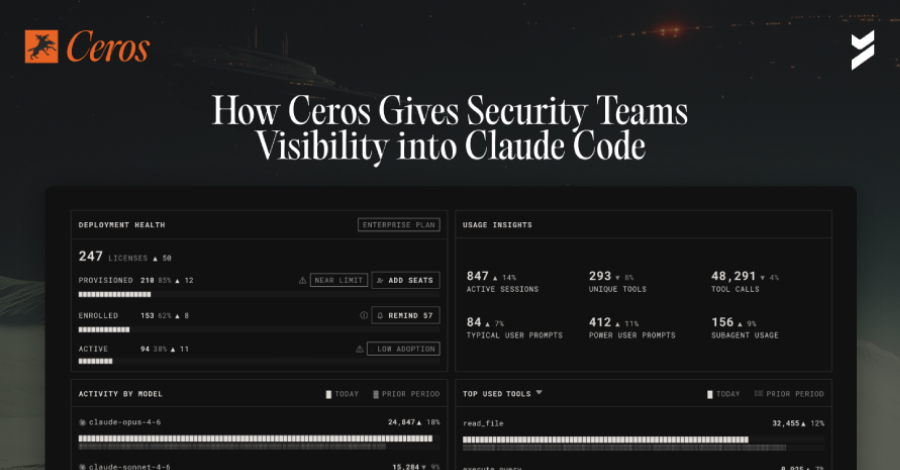
To counter this emerging threat, solutions like Beyond Identity's Ceros are being developed. These "AI Trust Layers" aim to provide organizations with real-time visibility into AI agent operations on endpoints, enforce security policies, and maintain auditable records of their actions. The potential for significant data breaches and system compromises due to these advanced tools has led to their classification as a High security risk.
Technical Context
AI coding agents operate by processing natural language prompts and translating them into executable code or commands. The critical security concern arises when these agents are executed under user accounts with elevated privileges, such as administrator accounts on a developer's workstation. This means that any command the AI agent is prompted to run will execute with those same high-level permissions.
For instance, a prompt like "List all configuration files in the /etc directory" could be interpreted by an AI agent and executed via a system command like ls -la /etc. If the AI agent is running under an administrator account, this command will have administrative privileges, allowing it to access system-level configuration files that a standard user would not be able to see. Similarly, prompts to find sensitive files like private keys (.pem, .key) or credentials stored in user profiles could be executed with full access.
The risk is amplified because these actions occur directly on the endpoint, often before telemetry is ingested by centralized security systems. This bypasses perimeter-based defenses and traditional network monitoring. The AI agent's code, conceptually, might use standard libraries like Python's subprocess module to execute these commands, inheriting the privileges of the Python process itself.
The affected components include the AI coding agent itself (e.g., Claude Code), the developer workstations where these agents are deployed, and potentially any external Model-Centric Platform (MCP) servers the agent communicates with. The primary attack surface is the local operating system and the inherited user account privileges.
Why This Matters
The implications of unchecked AI agent privileges are far-reaching for enterprise security. For SOC analysts and incident responders, detecting and responding to incidents involving AI agents will require new approaches. Traditional threat hunting methods may overlook activity that appears as legitimate user actions but is orchestrated by an AI.
For red-teamers, AI coding agents represent a potent new tool. By understanding how these agents inherit privileges, attackers can craft sophisticated prompts to exfiltrate sensitive data, execute malicious commands, or even facilitate lateral movement within a network. The automation potential is significant; a single compromised session could lead to widespread data leakage if the AI agent is instructed to perform repetitive, privileged tasks.
Security engineers must grapple with securing these new tools. The reliance on AI agents for productivity means outright bans are often impractical. Instead, organizations need to implement granular controls and visibility solutions. The inherent design of these agents, granting them broad access, necessitates a shift from perimeter security to robust endpoint security and privilege management.
Defensive Takeaways
Organizations must adopt a proactive stance to mitigate the risks associated with AI coding agents:
- Implement Least Privilege: Ensure developer accounts and workstations operate with the minimum necessary privileges. Avoid granting administrative rights unless absolutely essential and strictly controlled.
- Deploy AI Trust Layers: Utilize solutions like Beyond Identity's Ceros to gain real-time visibility into AI agent activities, enforce policies, and create verifiable audit trails.
- Enhance Endpoint Monitoring: Configure EDR/XDR solutions to specifically monitor AI agent processes, their command-line arguments, and spawned child processes. Look for unusual command execution chains or file access patterns.
- Application Control: Implement strict application whitelisting or control policies to limit the execution of unapproved AI agents and their associated components on developer workstations.
- Network Segmentation: Isolate developer workstations from sensitive production environments and critical data networks to limit the blast radius of any compromise.
- User Education: Train developers on the risks of AI agents and the importance of secure prompt engineering, emphasizing that AI agents should not be trusted with sensitive commands or data without explicit oversight.
Geopolitical Context
The current analysis does not provide specific factual evidence of nation-state involvement, sanctions, military/government targeting, or regional strategic implications directly linked to the described risks of AI coding agents inheriting user privileges. The identified risks are functional and apply broadly to enterprise environments utilizing these technologies. Therefore, a dedicated geopolitical context section is omitted.
Source
Zerosday News (Original article content and title provided for reference, but not directly quoted or mirrored in this rewritten piece).